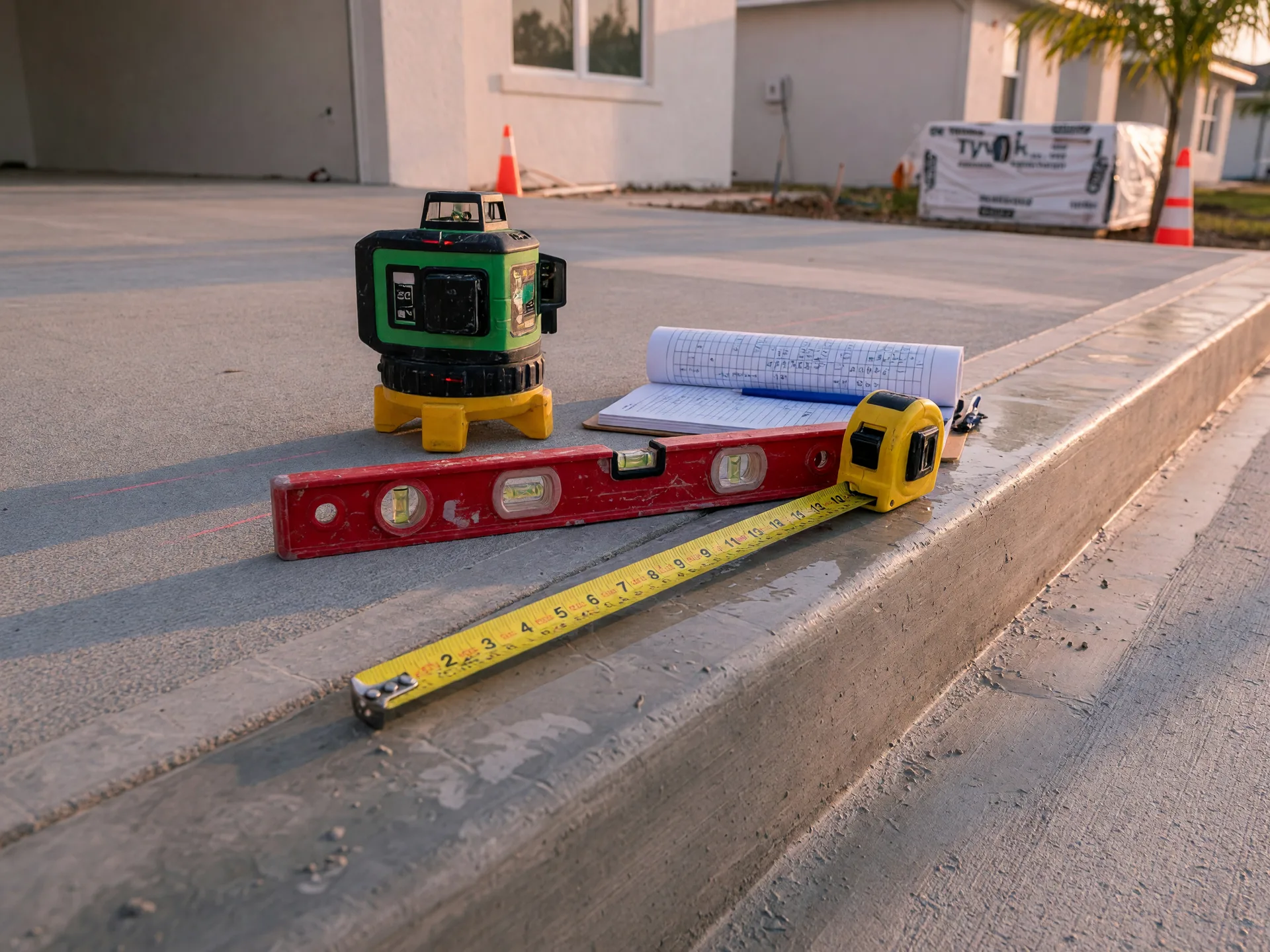
New construction inspections get skipped more often than any other step in the buying process, which is strange, because a new home is inspected by county officials and the builder's own quality teams, but nobody whose paycheck depends on finding problems for you. A good rule: hire a licensed inspector on a new build just as you would on a resale, and pair it with your own pre-drywall walk and final walkthrough.
The pre-drywall inspection
Before the drywall goes up is the only time you can see the things that matter most: how plumbing lines are run, how the HVAC is seated, whether the roof trusses are nailed and braced properly, and how the block and slab behave at the corners. Book this inspection at the same time as the builder's electrical and plumbing rough-in inspections, and bring your floor plan to verify the framing matches the plan. Fixing framing issues now costs almost nothing. Fixing them after drywall is a demolition job.
The pre-closing inspection
A few weeks before closing, run the most thorough inspection of the house as it stands: roof, exterior, foundations and drainage, windows and doors, plumbing function, electrical panel, HVAC operation, and all the finishes. Any deficiency goes on the punch list, and in a new construction contract you must get your own inspection completed within the allowed window, often the fifteen to thirty days before closing, or you can waive the right without realizing it.
The final walkthrough
At the final walk, you are not looking for the same things as the inspector. You are checking that every punch item is actually fixed, that the appliances you selected are installed, that the garage door, pool equipment if applicable, and smart-home systems function, and that the house is clean and complete. Take photos of everything, including meter readings and the interior with your phone's timestamp.
Common findings on new builds
- Cosmetic defects: paint, grout, trim, and door hardware issues are the most common findings on a new home.
- Incomplete or unconnected items: missing screens, reversed drains, or outlets installed but not terminated.
- Water and drainage concerns around the foundation, which are worth catching before landscaping hides them.
- Warranty paperwork gaps: confirm the warranty documents are delivered and registered, not just promised.
One warning worth repeating: a builder's final inspection and county certificate of occupancy do not substitute for your own inspector. The CO means the house meets code as checked. Your inspector checks that the house is built to the quality a buyer expects. Both matter, and only one of them is looking out for you.
Related reading on this site

Written by Tyler Gibson
Florida-licensed Realtor, team leader, and investor with 150+ transactions. Have a new-construction question this guide did not answer?